Engine Variants
|
At first release, there were two different basic engine designs. The 4-port and the 6-port. (In Europe and some other regions, the 4-port is referred to a "192hp" or "197hp", depending on the transmission, and the 6-port is referred to as "hi-power", "232hp", etc... i believe all of these had the 6-speed manual in those regions.) The difference is essentially that the 6-port has 2 more intake ports than the 4-port. This allows a higher amount of air flow into the engine at high RPM. A 4-port beyond 7,500rpm is being choked by difficulty flowing enough air. The two additional ports in a 6-port provide enough air flow to overcome this problem.Like any other intake flow change, allowing more airflow at higher revs means a shift of airflow optimization away from low revs. The 4-port actually has a few ft/lbs of torque more than the 6-port as a result.
|
Which cars each of these were installed on is most easily identified by what transmission is in the car.
For 2009, the engine design was updated in make subtle but significant ways:
Note: All Automatic Transmission equipped RX-8s also lack a VFAD (Variable Fresh Air Duct), which is an additional reason for lower power on the automatic RX-8s.
- 2004-2005 4 speed Automatic transmissions (North America): 4-port engine, Series1 design
- 2004-2008 4 speed Automatic transmissions (Europe): 4-port engine, Series1 design
- 2006-2008 6 speed Automatic transmissions: 6-port engine, Series1 design (combination was not sold in Europe)
- 2004-2008 6 speed Manual transmissions: 6-port engine, Series1 design
- 2004-2008 5 speed Manual transmissions: 4-port engine, Series1 design (combination was not sold in North America)
For 2009, the engine design was updated in make subtle but significant ways:
- 2009-2012 All transmissions: 6-port engine, Series2 design.
Note: All Automatic Transmission equipped RX-8s also lack a VFAD (Variable Fresh Air Duct), which is an additional reason for lower power on the automatic RX-8s.
Swapping between engines:
Of the 3 designs (4-port Series1, 6-port Series1, 6-port Series2), each design is directly swappable into RX-8s that had that same design. So you can use a 6-port from a 2008 Automatic directly in a 2004 6-speed manual with zero modifications, and vise versa.
The Series1 and Series2 engines can be physically installed in each other's vehicles, however the OMP and electronics differences are considerable. Swapping between Series1 and Series2 will involve replacing every electronics module in the car, even the ones not engine related.
The 4-port and 6-port can likewise be physically installed in each other's vehicles, but there are significant electronic differences that will require replacement or re-coding of at least the ECU, likely additional components. If the 4-port to 6-port swap also includes a change of transmissions then there are additional hardware components that need to be converted as well.
Swapping between any of the different engine designs becomes a long and costly process.
Of the 3 designs (4-port Series1, 6-port Series1, 6-port Series2), each design is directly swappable into RX-8s that had that same design. So you can use a 6-port from a 2008 Automatic directly in a 2004 6-speed manual with zero modifications, and vise versa.
The Series1 and Series2 engines can be physically installed in each other's vehicles, however the OMP and electronics differences are considerable. Swapping between Series1 and Series2 will involve replacing every electronics module in the car, even the ones not engine related.
The 4-port and 6-port can likewise be physically installed in each other's vehicles, but there are significant electronic differences that will require replacement or re-coding of at least the ECU, likely additional components. If the 4-port to 6-port swap also includes a change of transmissions then there are additional hardware components that need to be converted as well.
Swapping between any of the different engine designs becomes a long and costly process.
How do I quickly tell which one a car has?
The easiest method is to look for the Upper Intake Manifold (UIM). It's the large curved section of black plastic that curves from the center right side of the engine bay to the back left (from a perspective of standing in front of the car looking at the engine bay). Look for the presence of the two intake runners that lead to the two extra ports. The runners you are looking for are to each side of the main runners, and are positioned lower
The easiest method is to look for the Upper Intake Manifold (UIM). It's the large curved section of black plastic that curves from the center right side of the engine bay to the back left (from a perspective of standing in front of the car looking at the engine bay). Look for the presence of the two intake runners that lead to the two extra ports. The runners you are looking for are to each side of the main runners, and are positioned lower
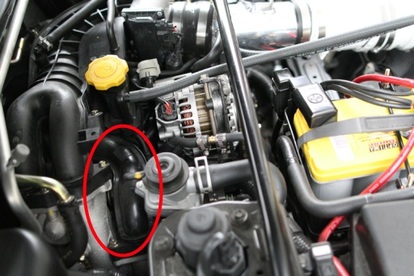
6-Port Engine. Note the lower intake runner circled in red
|
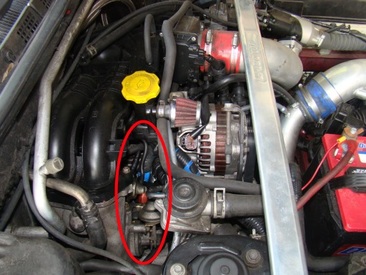
4-Port Engine. Note the lack of a lower intake runner where the red circle is. Compare to the 6-Port picture.
|